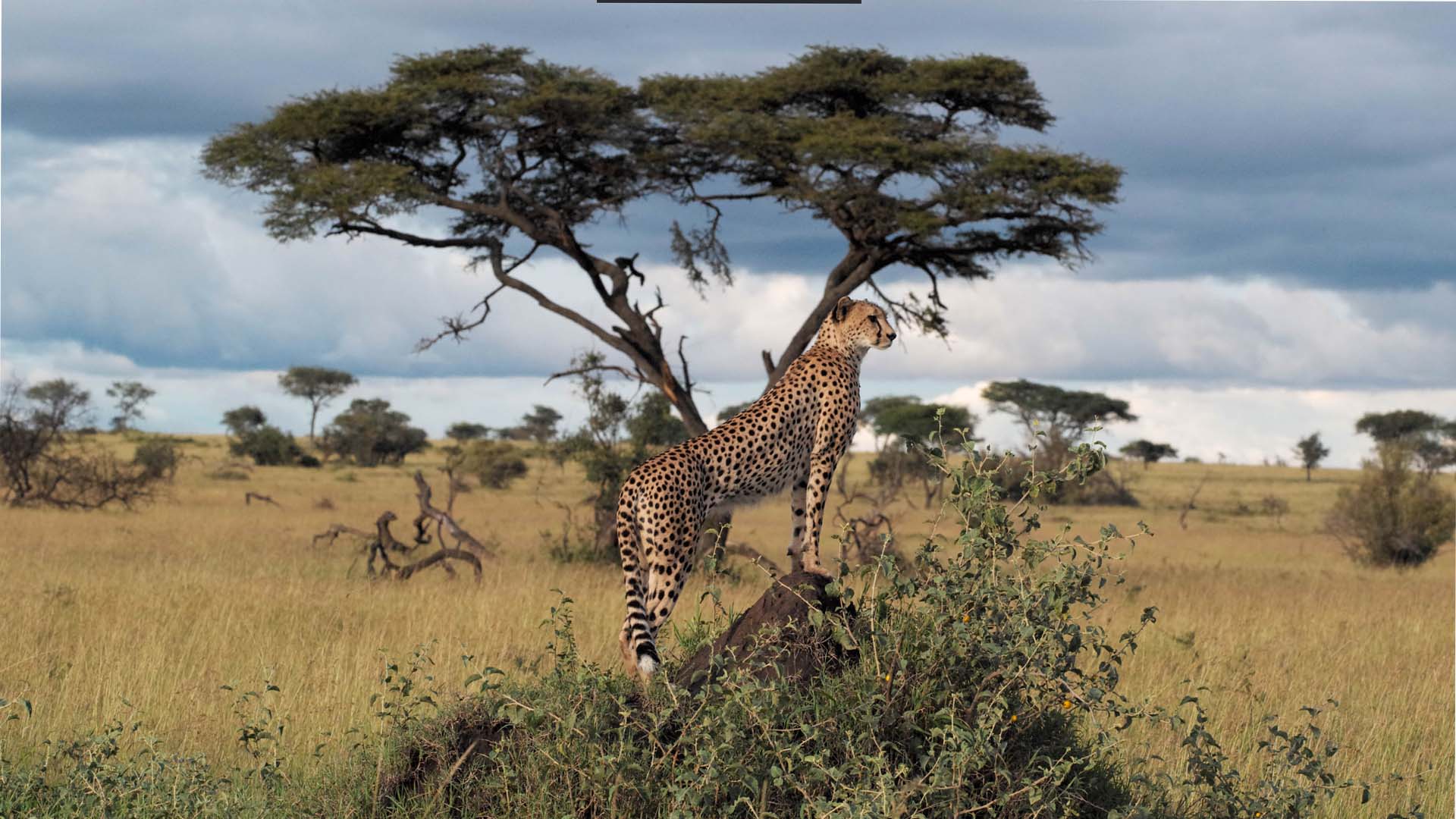
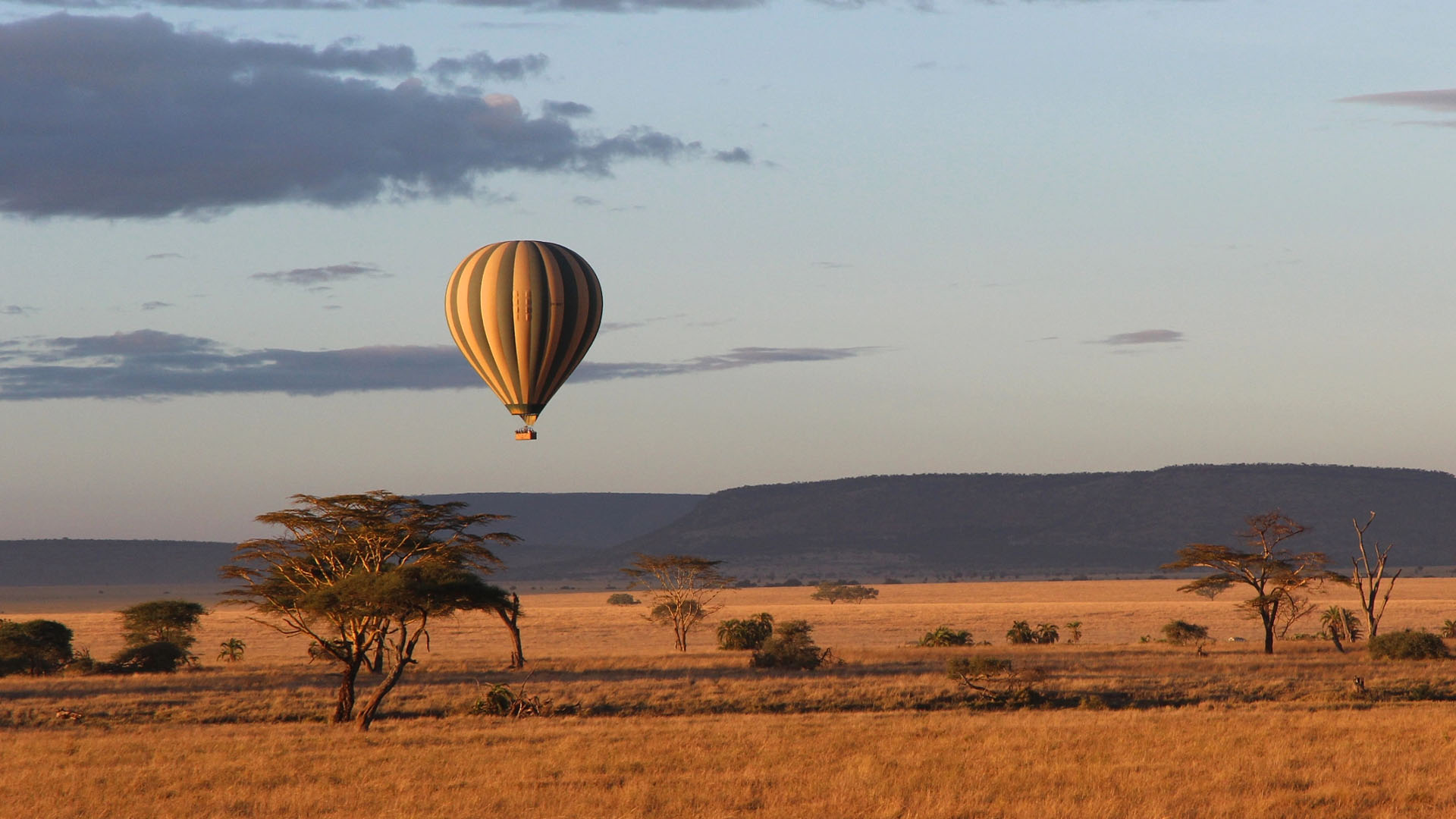
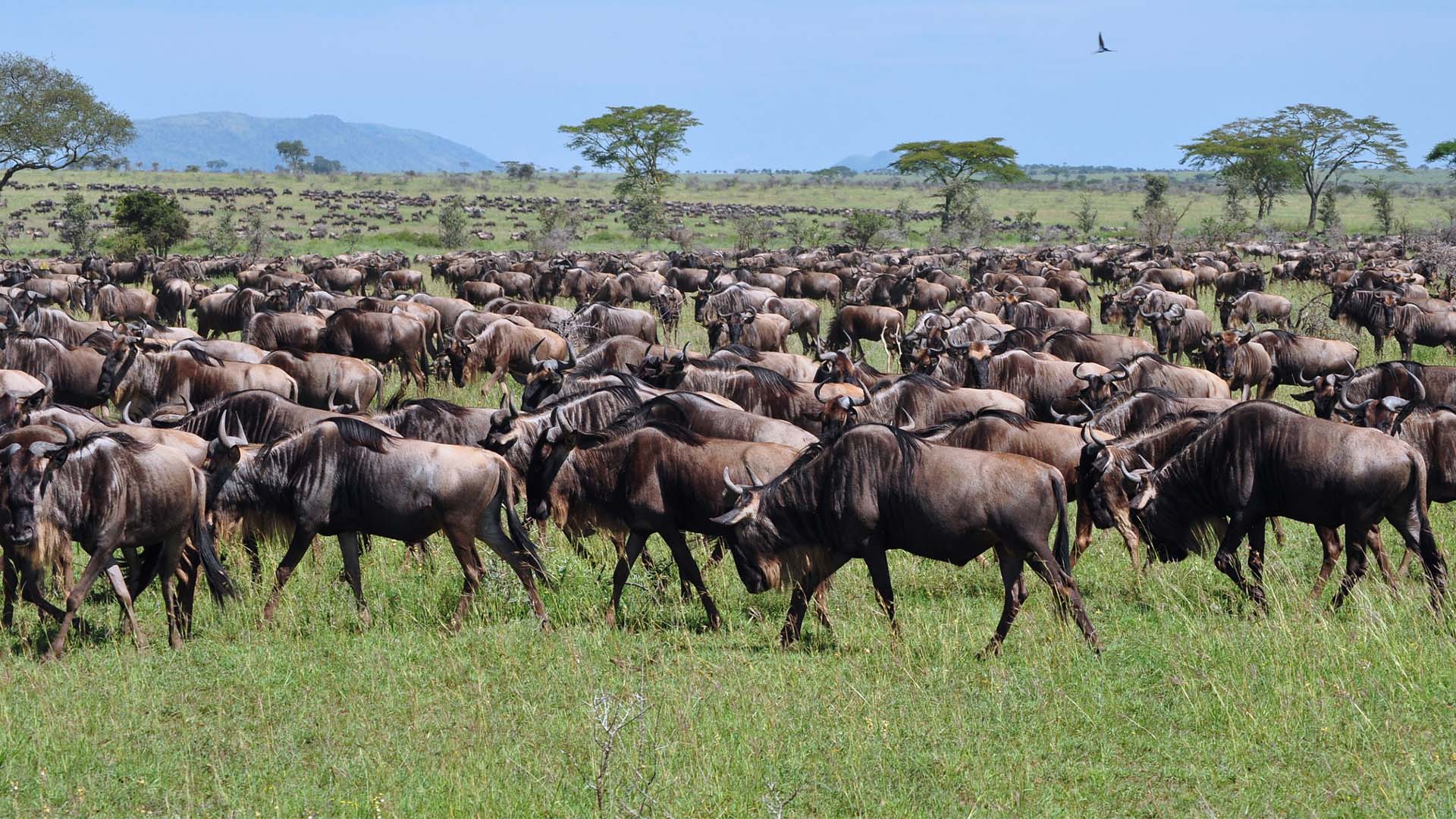
Tanzania’s Serengeti National Park is one of Africa’s most famous safari destinations, celebrated for its vast open plains, extraordinary wildlife and the spectacular Great Migration. The park is home to large populations of wildebeest and zebra, together with some of Africa’s most iconic predators, including lions, cheetahs, leopards and hyenas.
The Great Migration moves through the Serengeti ecosystem throughout the year as millions of wildebeest and other grazing animals follow seasonal rains and fresh grass. Depending on the time of year, travelers may experience enormous herds on the plains, the dramatic wildebeest calving season or the possibility of witnessing river crossings in northern Serengeti.
But you do not need to visit during the migration to enjoy an exceptional Serengeti safari. The park offers excellent year-round wildlife viewing, with the central Seronera area particularly well known for its resident big cats and abundant game.
For first-time safari travelers, wildlife photographers and experienced safari enthusiasts alike, Serengeti National Park offers an unforgettable combination of wildlife, landscapes and authentic African safari experiences.
14,750 km² : Serengeti National Park covers approximately 14,750 square kilometres of plains, woodland, rivers and diverse wildlife habitats.
By road: Serengeti can be reached by safari vehicle from Arusha as part of a northern Tanzania safari itinerary.
By air: Scheduled and charter flights connect Serengeti with Arusha and other safari destinations, with several airstrips serving different areas of the park.
June–October: Dry season and excellent general wildlife viewing.
January–March: Calving season in southern Serengeti.
The best time depends on what you want to experience, particularly if your main goal is the Great Migration.
3–4 nights recommended
Three nights gives you a good introduction to Serengeti, while four or more nights allow you to explore further and increase your opportunities for wildlife viewing
Serengeti is one of Tanzania’s finest destinations for wildlife viewing, with a remarkable variety of animals and habitats.
Wild animals are free-ranging, so sightings can never be guaranteed. That unpredictability is part of what makes every Serengeti game drive different.
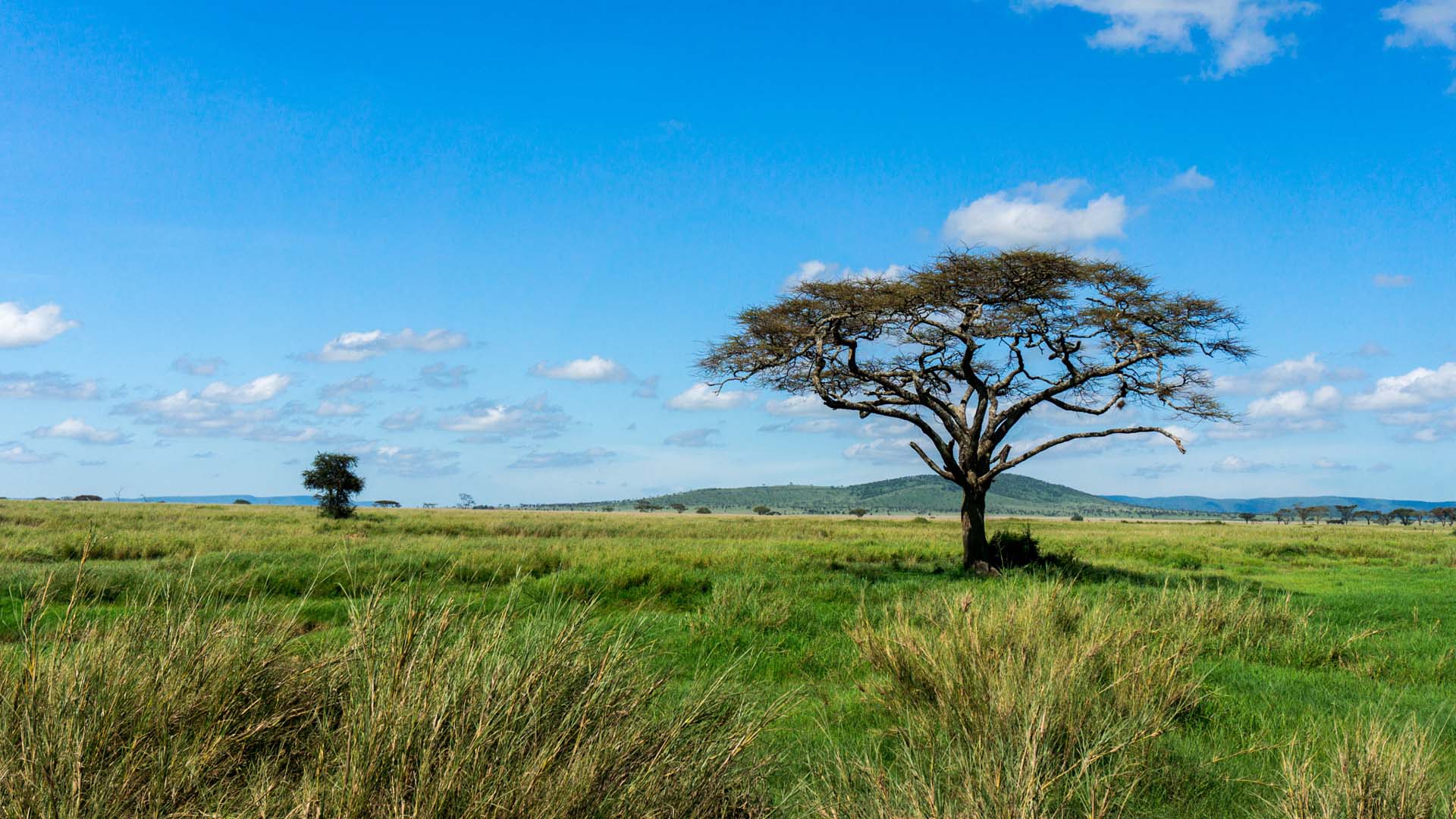
The name Serengeti comes from the Maasai word “Siringit,” commonly translated as “the place where the land runs on forever.”
The name perfectly describes the park’s enormous open plains, where the horizon seems to stretch endlessly across the Tanzanian landscape.
Tell us a little about your dates and group, and we will reply within one business day with a tailored quote.